Product Prototyping in China Done Properly
A prototype is not simply proof that a factory can make something that resembles your idea. It is the first serious test of whether your product can be manufactured consistently, compliantly and profitably at volume. Product prototyping in China can shorten development cycles and provide access to exceptional manufacturing capability, but only when the process is managed with the same discipline expected in production.
For brands, importers and product teams, the commercial risk is rarely the first sample itself. The risk is approving a sample built with substitute materials, unverified components or hand-finished processes that cannot be repeated once an order moves to the production line. A well-managed prototype exposes those risks early, when changes are less costly and easier to control.
Why Product Prototyping in China Requires Structure
China offers deep supplier networks across consumer goods, electronics, packaging, textiles, homeware and specialist components. This makes it possible to source materials, tooling, engineering support and assembly in close proximity. It also means that two factories quoting for the same concept may have very different levels of technical capability, quality discipline and willingness to communicate problems.
The lowest quotation is therefore not a reliable starting point. A factory may be highly capable at producing an existing catalogue item but poorly equipped to develop a custom design. Another may produce an attractive pre-production sample while relying on manual work that makes the unit cost unviable at scale. The right partner must be assessed against the actual development requirement: materials, tolerances, tooling, finishing, safety expectations, likely order volume and target market.
Before a supplier receives drawings or a physical reference product, the brief should define what success looks like. This includes the product’s intended use, dimensions, required functions, acceptable material options, colour standards, packaging format, target cost and compliance obligations. Vague briefs create vague quotations and leave too much room for assumptions.
Protect the design before sharing it
Intellectual-property protection should begin before the first factory conversation, not after a sample arrives. Use non-disclosure and non-use agreements suited to the jurisdiction, and share information in controlled stages. A supplier does not always need the entire commercial plan to quote an initial technical solution.
It is equally important to establish ownership of moulds, tooling files, technical drawings and any custom artwork. If a tool is commissioned, documentation should state who owns it, where it will be stored, whether it can be used for third parties and how it will be released if production moves. These points can feel administrative at the prototype stage, but they determine your practical control later.
Start With Supplier Qualification, Not Sampling
Sending an enquiry to many factories may appear to create leverage. In practice, it often produces inconsistent advice, duplicated sampling fees and a confusing comparison of specifications that are not like for like. A more effective approach is to shortlist suppliers based on category experience and validate them before committing development spend.
Factory qualification should cover production equipment, engineering capability, quality systems, export experience and capacity. It should also examine whether the supplier performs critical processes in-house or subcontracts them. Subcontracting is not automatically a problem, but undisclosed subcontracting weakens visibility over quality, lead times and IP.
A factory audit provides evidence that goes beyond a sales presentation. It can confirm whether claimed machinery is present, whether incoming materials are controlled, how defects are handled and whether the site can maintain acceptable working and safety conditions. For products with a high risk of failure, a technical review with the factory’s engineer is often more revealing than a general quotation meeting.
The best prototype supplier is not always the best volume supplier. Some specialist workshops excel at quick iterations but cannot support mass production, while larger factories may require firm specifications before allocating engineering time. This is not a reason to avoid either type of supplier. It is a reason to decide early whether the prototype is intended for concept validation, market testing or direct transfer into production.
Turn the Product Brief Into a Controlled Specification
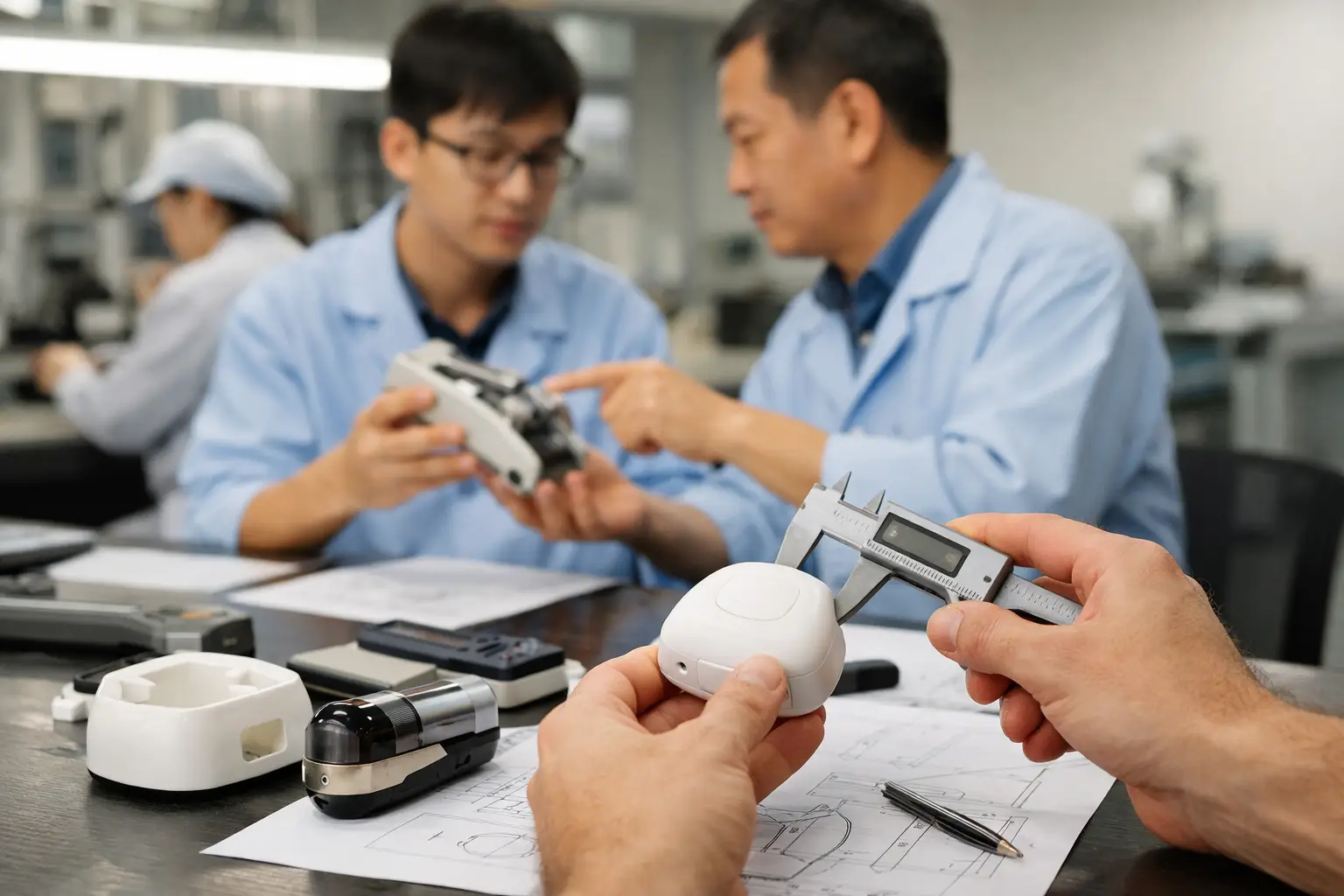
A good prototype process moves from concept to specification in stages. The first sample may test form, size and visual direction. The next should verify material choices, construction and functionality. The final pre-production sample should reflect the agreed production method, approved components, packaging and finish.
Each stage needs written feedback. Annotated photographs, measured dimensions, material references and a clear change log prevent the familiar problem of a factory reverting to an earlier version or interpreting informal feedback differently. Verbal approvals over messaging platforms are useful for speed, but formal documents should remain the source of truth.
A controlled specification should record the following:
- approved drawings, dimensions and tolerances;
- bill of materials, including grades, colours, finishes and approved component sources;
- functional and performance requirements;
- packaging, labelling and artwork requirements; and
- inspection criteria, defect classifications and approved reference samples.
The level of detail depends on the product. A simple cotton tote bag does not require the same engineering pack as a rechargeable consumer device. Yet both benefit from measurable standards. For a textile product, that may mean fabric weight, stitching density, print adhesion and colour fastness. For an electrical product, it may include battery specifications, charging performance, operating temperature and component traceability.
Test What Production Will Actually Deliver
The most expensive prototype mistake is approving a sample that was never made under real production conditions. Hand-picked materials, extra finishing time and a senior technician’s attention can make an early sample look excellent. Those advantages may disappear when thousands of units are being produced across several shifts.
Ask direct questions: Is this component production-grade? Is this finish achievable on the planned production equipment? Does the quoted price include the approved material? What changes when the order quantity rises? A responsible supplier should identify constraints rather than promise that every request is possible.
Where the product has safety, chemical, electrical or market-entry requirements, compliance planning must run alongside development. Testing after production is underway can lead to redesign, scrapped inventory or delayed shipment. Relevant standards vary by product and destination market, so the testing plan should be based on where the goods will be sold, not merely where they are made.
For many categories, an independent laboratory test is necessary before release. Equally, laboratory compliance does not replace factory quality control. A product can pass a material test and still fail because of assembly defects, incorrect labelling, poor packaging or inconsistent components. The specification, inspection plan and final test requirements must work together.
Use Prototype Reviews to Protect Cost and Timing
Prototype development is a commercial process as well as a creative one. Every design decision affects tooling, yield, labour time, material consumption, packaging volume and freight. A slightly more expensive component can reduce assembly failures. A simplified finish can improve output and protect the margin. The right decision depends on the brand position, expected sales price, returns risk and forecast volume.
At each approval point, review the landed-cost model rather than the ex-factory price alone. Include sampling, tooling, testing, inspection, packaging, duties, freight and likely wastage. Products that appear commercially attractive at a factory gate can become uncompetitive once bulky packaging or high rejection rates are considered.
Timing deserves the same attention. Tooling changes, material lead times and laboratory testing can all extend development. Build contingency into the launch plan, especially where a seasonal selling window or retail delivery date is fixed. Rushing a factory to meet an unrealistic date commonly transfers risk into quality.
A first article inspection is a valuable checkpoint before bulk production proceeds. It verifies that the first completed units match the approved sample and documented specification. For complex products, in-process inspections add further control by identifying recurring faults before the whole order is completed. This approach protects both the customer and the supplier: defects are resolved while corrective action is still practical.
A Local Team Changes the Quality of Decisions
Remote product development can work, but it relies heavily on clear documents and timely verification. Time-zone differences, translation gaps and the inability to inspect physical samples create room for small misunderstandings to become costly errors. Local representation provides a direct route to the factory floor when a sample differs from the agreed standard or an engineering change needs clarification.
EC4U manages this process as a co-development responsibility, from supplier qualification and prototype review through quality assurance, compliance coordination and shipment. The objective is not to add another layer of communication. It is to give the buyer one accountable team that can challenge assumptions, verify execution and keep decisions connected to the final commercial outcome.
The right prototype is not the one that arrives fastest or looks best in a photograph. It is the version that proves your product can be made repeatedly, at the required quality and cost, by a supplier you can rely on. Treat that proof as a release gate for growth, and the production order begins on far firmer ground.