Quality Assurance That Protects Your Supply Chain
A failed container is rarely caused by one dramatic factory mistake. More often, it begins with a material substitution that was never approved, an unclear tolerance on a drawing, a rushed production line, or an inspection carried out too late to correct the problem. Quality assurance is the system that prevents these small gaps from becoming expensive claims, delayed launches and damage to your brand.
For businesses sourcing from China and across Asia, quality cannot be treated as a final checkpoint before goods leave the factory. It must be managed from supplier selection through product development, production, packing and shipment. The earlier a risk is identified, the more options you have to correct it without compromising cost or delivery.
Quality Assurance Is More Than Final Inspection
Final inspection remains valuable. It can reveal defects, incomplete quantities, incorrect labelling or poor carton condition before a shipment is released. But it is only one part of quality assurance. By the time a finished-goods inspection identifies a systemic problem, the factory may have completed the full order. Rework can be costly, lead times may slip and replacement stock may no longer support your sales plan.
Quality assurance is a preventive discipline. It establishes how a product should be made, what materials and workmanship are acceptable, how compliance requirements will be met, and when production must be checked. Quality control, by comparison, focuses on verifying whether the goods meet those requirements at defined points.
The distinction matters commercially. An importer that relies only on final inspection is effectively checking quality after most of the manufacturing risk has already occurred. A managed assurance programme creates control before and during production, when corrective action is still practical.
Start With the Right Factory and Clear Requirements
A factory that produces a good sample is not automatically capable of delivering consistent volume production. Before placing an order, supplier qualification should examine whether the manufacturer has the right production equipment, technical knowledge, quality systems, capacity, subcontracting controls and experience in your product category.
A factory audit provides a structured view of these capabilities. It should assess the production environment, incoming-material controls, in-process checks, traceability, staff training, social and ethical practices, and the way non-conforming goods are handled. The purpose is not simply to pass or fail a supplier. It is to understand where the operational risks sit and whether the factory can manage them at the scale you require.
Clear product documentation is equally important. Quality cannot be inspected accurately if the standard is open to interpretation. Product specifications should define dimensions, materials, colours, finishes, tolerances, functions, packaging, labelling and the acceptable quality level. For customised products, drawings, approved artwork and bill-of-material details should be controlled so that the factory is working from one agreed version.
This is particularly relevant for OEM and private-label programmes. A change to a coating, zipper, plug, carton insert or printed warning can affect product performance, regulatory compliance and customer perception. Verbal approval or an informal message is not enough. Changes should be documented, assessed and formally approved before they enter production.
Build Control Into Product Development
The sample process is where a sourcing programme either gains clarity or accumulates hidden risk. Development samples should test more than appearance. They must confirm functionality, construction, dimensions, colour matching, packaging fit and, where relevant, safety and performance requirements.
For a new product, a first article inspection creates an important control point. It compares the initial production output against the approved sample and specification before the factory moves to full production. This is often the best time to identify repeatable issues such as incorrect assembly methods, inconsistent printing, weak stitching, poor fit or unsuitable packing materials.
Not every product requires the same level of intervention. A straightforward, repeat order from a proven factory may need a lighter inspection plan than a new electrical item, a children’s product or a product subject to strict EU and UK requirements. The correct approach depends on the product’s complexity, order value, customer expectations and the financial impact of failure.
Compliance planning must also begin early. Testing and certification cannot be treated as paperwork to obtain once production is complete. Applicable standards may influence component selection, product markings, instruction manuals, packaging warnings and factory processes. If testing reveals a failure at the end of the process, a redesign or material change can put an entire launch at risk.
Quality Assurance During Production
Once production is underway, control needs to reflect what is actually happening on the factory floor. An initial production check can confirm that approved materials, components and workmanship are being used from the start. This is particularly useful where a product has multiple components, detailed assembly steps or a history of inconsistency.
During-production inspection gives visibility when a meaningful proportion of the order has been completed. It can reveal whether defects are isolated or systematic, whether output is keeping pace with the agreed schedule, and whether packing standards are being followed. Where problems are found, the supplier should provide a corrective action plan with clear ownership and evidence that the issue has been addressed.
A quality process should not encourage factories to hide problems. The aim is to create a factual, accountable working relationship. Suppliers need to understand that early disclosure is preferable to discovering a defect after shipment. At the same time, the buyer or sourcing partner must make decisions quickly when clarification or approval is needed. Delayed feedback can be as disruptive as poor manufacturing.
Use Final Inspection as a Release Decision
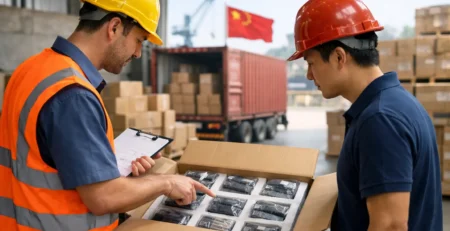
Pre-shipment inspection remains the final operational gate before goods are released for consolidation or export. Inspectors normally verify quantity, product appearance, workmanship, measurements, function, packaging, labelling and carton markings against the approved requirements. Sampling should follow an agreed method and acceptable quality level rather than subjective judgement.
The inspection report should provide evidence, not vague reassurance. Clear photographs, defect classifications, measurement records and quantity checks allow procurement teams to make an informed release decision. If goods fail, the next step should be agreed before freight is booked: rework, replacement, sorting, a commercial concession or, in serious cases, cancellation.
Passing inspection does not mean that every unit is perfect. Sampling is a risk-management tool, not a guarantee of zero defects. However, a disciplined programme significantly improves the likelihood that the shipment meets the standard your customers expect. For high-risk products or sensitive launches, businesses may choose tighter sampling levels, more frequent checks or 100 per cent verification of critical features.
Protect Quality Through Packing and Shipping
Product quality can be lost after manufacturing if packaging, warehouse handling and transport are not controlled. Cartons need to withstand stacking, container loading and long-distance transit. Inner packaging should protect surfaces and components, while labels and marks must support accurate receiving, customs documentation and fulfilment.
For multi-supplier orders, consolidation introduces another control point. Goods from different factories should be counted, inspected where required, correctly labelled and packed according to the final shipment plan. A consolidated shipment can reduce freight cost and simplify delivery, but only if stock is accurately managed and each supplier’s goods remain identifiable.
The handover between factory, warehouse and freight provider should be planned rather than assumed. Shipment delays often arise because cargo-ready dates, carton dimensions, export documents or compliance records were not confirmed early enough. Quality assurance therefore supports delivery performance as well as product conformity.
Make Accountability Part of the Process
The most effective quality programmes have named responsibilities, agreed escalation routes and written records of decisions. A supplier is responsible for making the product correctly. The buyer is responsible for defining requirements and approving key milestones. A sourcing partner can coordinate the full process locally, verify facts on the ground and ensure issues do not disappear between teams, time zones and languages.
At EC4U, this means managing quality as part of the wider sourcing operation: supplier assessment, product development, inspections, compliance coordination, consolidation and shipment readiness. Quality decisions affect cost, lead time and brand reputation, so they should not sit in isolation from commercial and logistics planning.
The practical goal is not to create unnecessary bureaucracy for a factory. It is to establish enough control that your business can scale with confidence. When every approved sample, specification, inspection result and corrective action contributes to a repeatable process, quality becomes something your supply chain delivers by design, not something you hope to find in the final container.