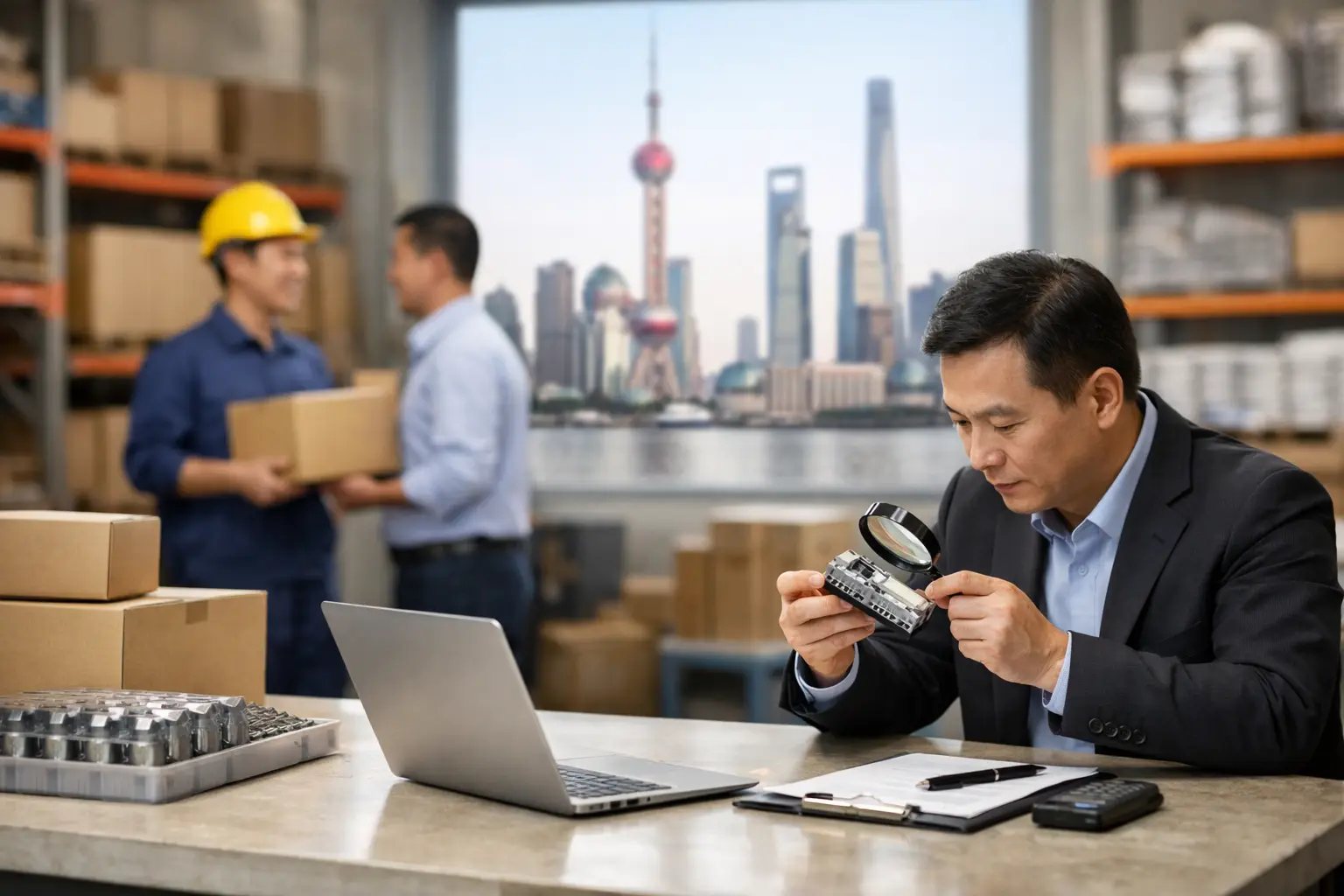
China Supplier Verification Before You Place an Order
A polished website, a fast quotation and an attractive unit price are not evidence of a dependable manufacturing partner. China supplier verification is the process that separates a legitimate, capable factory from a trading intermediary, an overstretched workshop or a supplier whose standards fall short once production begins. For European brands, getting this decision right protects far more than the first purchase order. It protects product quality, regulatory compliance, delivery commitments and customer trust.
The practical challenge is that verification is not a single document check. A supplier may have a valid business licence yet lack the machinery, quality systems or export experience required for your product. Equally, a capable factory can still be the wrong fit if it cannot meet your certification, packaging or intellectual-property requirements. Effective verification tests the claims that matter to your commercial model before they become expensive problems.
What China supplier verification should establish
The objective is not simply to decide whether a supplier is real. It is to establish whether that supplier can repeatedly make your product to the agreed specification, at the required volume, within the promised lead time and under acceptable commercial controls.
Start with legal identity. Confirm the Chinese company name, registered address, business scope, legal representative and operating status against official records. The name on the bank account, contract, invoice and licence should align. Material differences deserve an explanation before any deposit is released. This basic work can also reveal whether you are dealing with a manufacturer, a trading company or a group company.
That distinction is not automatically negative. A specialist trading company can add value where a product requires several component factories or where it provides strong export management. The risk arises when its role is unclear. If you believe you are negotiating directly with the factory but production is being subcontracted without visibility, control over quality, lead time and pricing is weakened from the outset.
Verification must then move beyond paperwork and examine operational reality. Does the site have the production lines it claims? Is its equipment appropriate for the process? How are incoming materials, in-process checks and finished goods controlled? Is the stated monthly capacity realistic once existing customer orders and seasonal demand are considered?
Verify the factory, not just the sales representative
A factory audit remains one of the most useful forms of China supplier verification because it turns assumptions into observable evidence. It should be proportionate to the product and the potential exposure. A low-value trial order needs less scrutiny than a regulated electrical product, a children’s item or a strategic private-label range, but no order should rely entirely on remote assurances.
During an on-site audit, assess the production flow from raw-material receipt to packing. Look for clear work instructions, calibrated test equipment, batch traceability, segregated non-conforming goods and documented corrective actions. Ask how defects are recorded, who can stop a production line and how customer complaints are investigated. A factory that only promises quality, without showing how it manages it, has not answered the question.
Worker conditions, fire safety and environmental controls also matter. European buyers increasingly face commercial and regulatory pressure to understand how products are made, not merely what they cost. Where social, ethical or environmental standards are relevant to your customers or sector, include them in the audit scope rather than treating them as a separate afterthought.
Photographs and video calls can support an assessment, particularly during early sourcing. They should not replace a physical visit for meaningful orders. A carefully framed video tour may show a clean production area while omitting a subcontracted process, crowded warehouse or weak finishing line. Local, independent inspection gives you a clearer view and allows follow-up questions in real time.
Match capability to your exact product
The strongest supplier on paper may still be unsuitable for your brief. Verification should focus on comparable manufacturing experience, not broad category claims. A factory producing generic kitchenware may not be equipped to deliver a premium branded range with food-contact documentation, precise colour matching and retail-ready packaging.
Request evidence of similar work, while respecting other customers’ confidentiality. Review samples, tooling approaches, material specifications, test methods and packaging capability. Ask where key components are made and whether those subcontractors are controlled. For OEM and ODM projects, establish who owns the tooling, drawings, mould files and approved master sample before development begins.
The sample stage is particularly revealing. A hand-finished sample produced by a senior technician is not proof that a production line can reproduce the result at scale. Move from a development sample to a signed, controlled golden sample, then validate it through a first article inspection when production tooling and materials are in use. This creates a reference point for every later quality decision.
Capacity deserves the same discipline. Rather than accepting a stated output figure, examine shift patterns, machinery uptime, workforce stability, current order book and material lead times. A supplier can have enough machines but insufficient skilled operators. It may also prioritise a larger customer when demand rises. Clear production planning and agreed delivery milestones are more useful than an optimistic promise.
Check compliance before committing to production
Compliance cannot be added at the end of the process with a certificate sent by email. Product requirements vary by category and market, from CE and UKCA obligations to REACH, RoHS, food-contact rules, labelling, packaging and sector-specific safety standards. The applicable route depends on the product, its intended use and where it will be sold.
Ask for relevant test reports, declarations, material data and certification records, then check that they apply to the exact product configuration. A report for a previous model, different material grade or unrelated factory is not adequate evidence. Confirm the testing laboratory, report number, issue date, standards tested and any conditions or limitations.
Where testing is needed, define the requirements during product development and budget for pre-production validation. Retesting after goods are complete can leave you with stock that cannot legally be placed on the market or requires costly rework. For regulated categories, specialist compliance advice may be necessary alongside factory verification.
Protect commercial and intellectual-property exposure
Verification also includes the way a supplier handles money, information and ownership. Confirm that payment instructions match the contracted company, and treat a last-minute request to pay a different entity as a serious escalation. Agree payment stages that reflect measurable progress, such as approved samples, inspection milestones and shipment release, rather than paying heavily against verbal assurances.
For branded or proprietary products, use clear agreements covering confidentiality, non-use and non-circumvention where appropriate. Mark drawings, control access to technical files and define ownership of tooling and artwork. These measures do not eliminate every risk, but they create practical boundaries and improve your position if a dispute occurs.
Price should be examined in the same context. An unusually low quotation may indicate missing quality controls, inferior materials, unrealistic labour assumptions or omitted packaging and freight-related costs. Ask for a structured cost breakdown where possible, compare like for like and negotiate against a fully agreed specification. The cheapest unit price rarely represents the lowest landed cost when defects, delays or failed compliance are included.
Turn verification into ongoing supplier control
Supplier qualification is the beginning of governance, not a one-off approval exercise. Conditions change: management teams leave, raw-material sources alter, capacity tightens and production may move between workshops. Regular communication, production monitoring and inspection keep those changes visible.
For most products, a practical control plan includes pre-production approval, in-line inspection at an agreed production stage, pre-shipment inspection against an agreed acceptance standard and final document checks before goods are released. The right level depends on the product’s risk, order value, defect history and the supplier relationship. A stable, proven factory may require a lighter touch than a new supplier making a complex customised item.
Keep performance records covering quality results, response times, delivery accuracy, corrective actions and commercial transparency. This gives procurement teams evidence for future negotiations and makes it easier to decide whether to develop, diversify or replace a supplier. It also prevents a familiar supplier from being treated as low risk purely because it has been used before.
For businesses without local teams, an accountable sourcing partner can coordinate this work across factory qualification, product development, quality assurance and logistics. EC4U approaches verification as part of full product ownership: the supplier, specification, inspection criteria and shipping plan must work together, because a failure in any one area can compromise the final delivery.
A verified supplier is not a guarantee of perfection. It is a supplier whose identity, capability and controls have been tested against your actual requirements, with clear evidence and a plan for managing what could still go wrong. That is the standard worth applying before your brand name, capital and customer promise enter the production line.