Third Party Versus In-House Inspections Compared
A container can leave a factory appearing fully compliant, only for the receiving team to find incorrect labelling, inconsistent finishes or missing components on arrival. At that point, the commercial damage is already done. The decision between third party versus in-house inspections determines who sees those issues early enough to prevent them – and who is accountable for the response.
For brands sourcing from China and elsewhere in Asia, inspection is not simply a final gate before shipment. It is a control point across product development, pilot production, bulk manufacturing and packing. The right model depends on your product risk, sourcing footprint, order volume and the operational capability you have on the ground.
Why the inspection model affects more than quality
A quality inspection protects several connected outcomes: product consistency, delivery dates, customer satisfaction, regulatory compliance and cash flow. When a defect is found before goods leave the factory, the supplier may be able to rework, replace or sort the affected units. When it is found in a European warehouse, the options are slower, more expensive and often damaging to a brand’s reputation.
The choice is therefore not merely whether to employ an inspector or appoint an external company. It is about how inspection information moves into supplier management. A useful inspection programme identifies defects, but an effective one also establishes root causes, agrees corrective actions and checks whether the factory has implemented them on the next run.
This matters especially for private-label and customised products. A supplier that produces a generic item well may still struggle with your approved colour, packaging specification, instruction manual, barcode placement or material requirement. Inspection must measure the product against the agreed specification, not against what the factory considers acceptable.
In-house inspections: maximum control, higher commitment
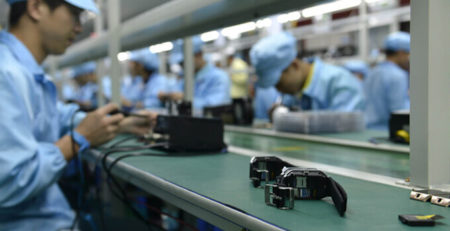
An in-house inspection team gives a business direct control over people, priorities, training and reporting standards. For companies with substantial and predictable purchasing volumes from a concentrated group of factories, this can be a powerful model. Inspectors learn the product range in detail, understand the brand’s quality history and can build practical working relationships with factory management.
This approach is particularly valuable where products are technically complex or highly regulated. Electrical goods, children’s products, food-contact items and products with demanding material tolerances often benefit from inspectors who know the critical failure modes as well as the written checklist. They can also be involved earlier, including during first article inspection, pre-production meetings and packaging approval.
However, an internal team requires more than recruitment. It needs a local legal structure or trusted employment arrangement, management oversight, calibrated equipment, ongoing training, travel planning and a clear escalation process. A single inspector can also create a coverage risk if several factories require visits on the same day, or if production moves to another province or country.
Independence is another consideration. An employed inspector should be fully empowered to stop or escalate a shipment when standards are not met. If commercial teams treat inspection as an obstacle to delivery rather than a protection for the business, even a well-trained internal team can face pressure to pass borderline goods.
Third party inspections: independent expertise and flexible coverage
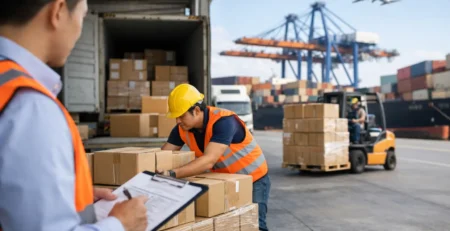
Third-party inspection providers offer local coverage without requiring a buyer to build its own Asian quality-control operation. They can deploy inspectors near the factory, use established sampling methods and issue reports quickly enough for corrective action before shipment. This is often the most practical choice for European brands sourcing from multiple regions, managing seasonal orders or working with a changing supplier base.
The strongest advantage is flexibility. A business can arrange pre-production inspection, during-production inspection, pre-shipment inspection and container loading supervision according to the risk of each order. It pays for the control points needed, rather than maintaining permanent capacity through quieter periods.
An independent provider may also bring useful objectivity to difficult supplier conversations. A documented report with photographs, measurements, defect classification and an agreed acceptance quality limit gives procurement teams a factual basis to require rework or negotiate a remedy. It reduces the risk that a factory’s own quality department marks work as acceptable without reference to the buyer’s requirements.
The limitation is that an external inspector only knows what the brief, checklist and product samples tell them. Generic checklists can miss the details that make a product commercially unacceptable: a premium finish that feels inconsistent, a logo that is slightly mispositioned, or packaging that fails to reflect the agreed brand presentation. Third-party inspections are only as effective as the product specification and communication behind them.
Third party versus in-house inspections: the practical trade-offs
Neither model is automatically better. In-house teams offer deeper product knowledge and direct control, but demand fixed investment and strong local management. Third-party teams offer independence, scalability and regional reach, but need detailed instructions and active supplier follow-up.
When comparing third party versus in-house inspections, procurement leaders should assess four operational questions:
- How concentrated is production? A stable, high-volume programme across a small number of factories may justify dedicated in-house resource. A varied supplier network is usually better served by flexible local coverage.
- How specialised is the product? The more technical the product and its testing requirements, the more important deep product expertise becomes. External inspectors may still be suitable, provided they receive clear training and test protocols.
- What is the cost of failure? A low-value promotional item and a safety-critical consumer product should not receive the same inspection plan. Consider recalls, returns, marketplace penalties, missed retail launch dates and reputational harm.
- Who closes corrective actions? Finding a defect is not the end of the process. Decide who will challenge the supplier, verify rework and prevent recurrence on future orders.
Cost should be assessed on a total-risk basis, not simply as a daily inspection fee or salary. A lower-cost model that allows a failed shipment through can become the most expensive option once air freight, rework, returns and lost sales are considered.
Build the inspection plan before production begins
The most reliable quality programmes begin before a purchase order is placed. Supplier qualification and factory audits establish whether a manufacturer has the machinery, process controls, capacity and management discipline required for the product. During development, approved samples, technical drawings, bills of materials and packaging artwork should be converted into measurable inspection criteria.
A good checklist distinguishes critical, major and minor defects. It specifies the sampling level, measurements, functional tests, packaging checks and required records. Where compliance is relevant, it should also identify the required test reports, traceability markings and documentation. An inspector cannot verify a standard that has never been clearly defined.
Inspection timing must match the production process. Pre-production checks confirm that materials, components and production instructions align with the approved sample. During-production inspections identify systematic issues while the factory still has time to adjust. Pre-shipment inspections assess the completed order, while loading supervision helps confirm that approved cartons are placed into the correct container and properly protected for transport.
For many businesses, the best answer is a managed hybrid model. Internal product managers retain ownership of specifications, product decisions and commercial priorities, while local quality specialists conduct factory visits, collect evidence and manage immediate follow-up. This gives the brand control over its standards without forcing it to build a full overseas infrastructure.
EC4U applies this approach by connecting inspection activity to supplier selection, product development, compliance and shipping coordination. The objective is not simply to issue a pass or fail report, but to keep quality decisions connected to the wider sourcing programme and the delivery commitments made to customers.
The right inspection structure is the one that gives your team timely facts, clear authority and a dependable route to corrective action. Start with the failures your business cannot afford, then design each factory visit, checklist and escalation path around preventing them before the goods leave Asia.